What Are Forged Wheels? Definition, Process and Buyer's Guide
Forged wheels are shaped from a solid 6061-T6 aluminum billet under extreme pressure, producing a dense grain structure that cast wheels cannot match. This guide explains what forged wheels are, how they are made, how they differ from cast wheels, and what importers should check before ordering.
2026/11/11
Reading volume: 0
News Details
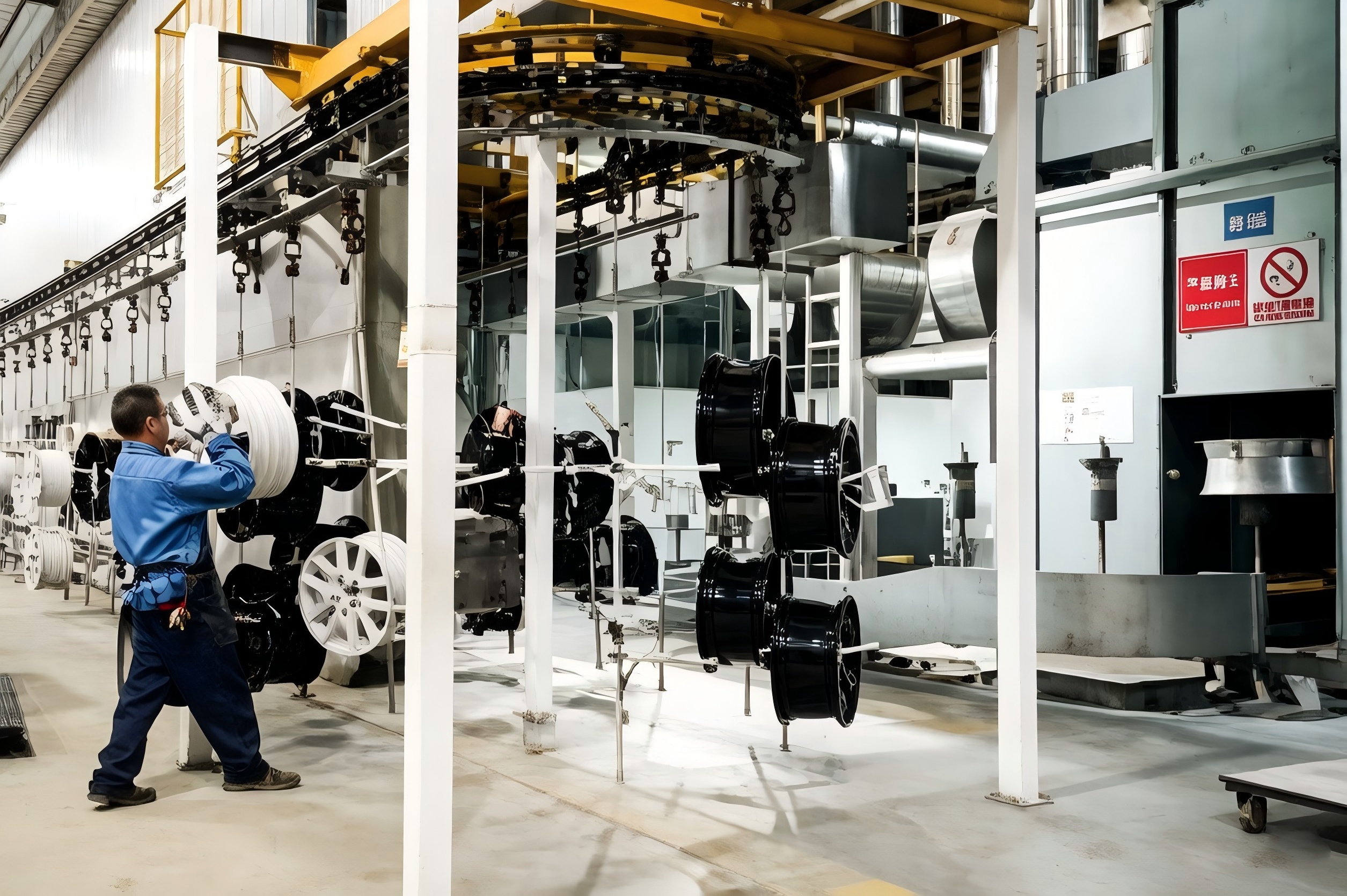
Forged wheels, or forged rims, are wheels shaped from a single solid block (billet) of aluminum alloy rather than being poured into a mold as liquid metal. A hydraulic press compresses the heated billet with enormous force, causing the metal to flow so that its internal grain structure remains continuous and follows the contour of the wheel. The forged blank is then heat-treated, CNC-machined and finished into a complete wheel. In common industrial usage, "forged wheels," "forged rims," "forged aluminum wheels" and "forged alloy wheels" all refer to the same manufacturing method and the wheels it produces.
To "forge" is therefore a process term, not a material label. Most forged wheels are made from the same family of aluminum alloys used for high-quality cast wheels; what sets them apart is that the metal is formed in its solid state under pressure, which transforms the internal structure of the material — and that is the difference buyers are actually paying for.
How Forged Wheels Are Made: From Billet to Finished Rim
Although each factory has its own line layout, the forged wheel process follows the same broad sequence:
- Billet preparation. Production begins with a solid cylinder of 6061 aluminum alloy, sawn to length and inspected before entering the line.
- Heating and press forging. The billet is heated to a temperature at which the alloy flows without melting, then compressed in a forging press so the metal fills the die and the grain structure aligns with the wheel's geometry.
- Heat treatment (T6 temper). The forged blank is solution heat-treated and artificially aged to reach the T6 condition, which locks in the strength the alloy is known for.
- CNC machining. The spoke faces, barrel, mounting face, bolt pattern, center bore and offset are machined to final dimensions on CNC lathes and machining centers.
- Finishing. The wheel receives its surface treatment — paint, powder coat, brushed, polished or plated — according to the customer's specification.
- Inspection and testing. Finished wheels undergo dimensional checks, runout and balance checks, and standardized safety testing before packing.
At Wheelman, engineering input begins before tooling: every design passes through FEA (finite element analysis), and new programs are validated under the PPAP protocols used in the OEM sector. This means fitment and structural questions are resolved in the design stage rather than discovered on the production line.
Forged vs. Cast Wheels: Why the Process Changes the Metal
The practical difference between forging and casting comes down to how the metal's internal structure forms. In casting, molten aluminum fills a mold and cools freely; small gas pockets and shrinkage porosity may remain, and the grain structure is random. In forging, the solid billet is compressed, so the grains stay tightly packed and oriented along the shape of the wheel.
| Aspect | Cast wheels | Forged wheels |
| Starting material | Molten aluminum poured into a mold | Solid aluminum billet pressed under high force |
| Grain structure | Forms freely as the melt cools | Continuous and aligned with the wheel's shape |
| Internal porosity | Possible gas pockets or shrinkage porosity | Dense structure with no casting porosity |
| Strength-to-weight ratio | Good | Higher — the same design can be made lighter or stronger |
| Typical role | High-volume, cost-focused product lines | Performance, luxury, heavy-load and custom programs |
Because the grain structure follows the wheel's shape rather than forming freely as molten metal cools, a forged wheel can carry the same load with less material. That is why forged wheels of the same design are generally lighter than their cast equivalents, and why the same metal can support more aggressive spoke designs and larger diameters without sacrificing strength.
6061-T6: The Aluminum Alloy Behind Forged Wheels
Most forged wheels, including every model Wheelman produces, use 6061 aluminum in the T6 temper. 6061 is a heat-treatable alloy containing magnesium and silicon, valued for its combination of strength, corrosion resistance and machinability. The "T6" designation means the material has been solution heat-treated and artificially aged to its highest practical strength condition for this alloy.
For buyers, the practical takeaway is simple: when a supplier says "forged 6061-T6," it tells you the wheel starts from a billet of a well-understood, widely used structural alloy, formed under pressure and heat-treated to a defined standard. It is a meaningful quality signal — provided the supplier can document it.
Monoblock, Two-Piece and Three-Piece Forged Construction
Forged is a method, not a single construction type. There are three common ways to build a forged wheel:
- Monoblock (one-piece). The entire wheel — center and barrel — is forged and machined from a single billet. It is the lightest and most rigid construction, and the standard choice for performance and mainstream custom programs. Wheelman's monoblock forged wheels are available from 17 to 23 inches with customizable offset.
- Two-piece. A forged center is joined to a separate barrel, allowing wider fitments, deeper concave profiles and more flexible width/offset combinations. A typical example is a forged two-piece structure in 18 to 23 inches with customizable ET.
- Three-piece. A forged center is combined with inner and outer barrel sections, offering maximum sizing flexibility and easy repair of individual components; it is the most involved construction to produce and assemble.
All three constructions are available from Wheelman in forged 6061-T6 aluminum, so a product line can mix structures — for example, monoblock wheels for everyday fitments and two- or three-piece wheels for deep-dish or show-oriented SKUs — while keeping the same material standard.
Fitment Basics Buyers Should Confirm Before Ordering
Whether a forged wheel fits a vehicle depends on a handful of parameters, and every one of them should be confirmed in writing before production:
- Diameter and width. Wheelman's forged programs cover 17 to 23 inches; width determines tire fitment and stance.
- Bolt pattern (PCD). The number and spacing of lug holes, such as 5x100, 5x110, 5x114.3 or 5x120, must match the hub exactly.
- Center bore. The center hole should match or correctly adapter-fit the hub's diameter.
- Offset (ET). Offset controls how far the wheel sits in or out of the fender; Wheelman machines ET to customer specification.
- Load requirement. Vehicle weight class — passenger car, SUV, off-road or heavy EV — defines the strength target the wheel must meet.
Precise matching of bolt pattern, width, center bore and offset is what separates a usable wheel program from a warehouse of stock that does not fit. This is where a supplier's fitment-confirmation process matters as much as its forging capability.
When Forged Wheels Are the Right Choice — and When They Are Not
Forged wheels justify their premium where weight, strength or design depth has commercial value: performance trims, luxury fitments, show and custom builds, off-road vehicles and heavy applications such as electric vehicles, whose battery packs make unsprung mass and load capacity more critical than in conventional cars. For entry-level replacement lines where cost is the deciding factor, cast wheels remain a sensible option — a balanced catalog often uses both.
Order volumes are also more accessible than many buyers expect. Wheelman accepts retail orders from a single set (four wheels), while wholesale starts at 60 pieces per specification and finish, with color mixing allowed. Lead times are typically 15–25 days for monoblock finishes such as brushed, polished or painted, roughly 10–15 days longer for chrome plating, and 25–35 days for two- and three-piece builds.
How to Verify a Supplier's Forged Wheel Claims
"Forged" is easy to claim on a website and harder to prove in a shipment. Before committing to a program, ask a supplier to document the claims that matter:
- Material certification. Confirmation that the billet is 6061-T6, with traceable material records.
- Heat-treatment records. Evidence that the T6 temper is actually applied and monitored.
- Safety testing. Results from standardized wheel tests such as impact, radial fatigue and cornering fatigue.
- Quality system and market compliance. Certification to recognized automotive quality systems — Wheelman is certified to ISO9001, QS9000 and TS16949 — and, for the US market, registration with the Department of Transportation (DOT).
- OEM-grade validation. For OEM/OES programs, PPAP documentation and FEA-backed design reviews.
A supplier that can produce these documents on request — and that offers pre-production 3D renderings and fitment confirmation, as Wheelman does before tooling — gives a distributor or dealer brand a defensible answer when its own customers ask why the wheels are worth their price.
Key Takeaways
- Forged wheels are made by pressing a solid 6061-T6 aluminum billet into shape, producing a continuous grain structure that cast wheels cannot replicate.
- The process delivers a higher strength-to-weight ratio: lighter wheels, deeper designs and better load capability from the same alloy family.
- Construction (monoblock, two-piece, three-piece) and fitment data (size, PCD, ET, center bore, load) should be specified per program, not assumed.
- Supplier claims should be verified through material certificates, test reports, quality certifications and fitment confirmation before an order is placed.
If you are planning a forged wheel line for your market, Wheelman supplies OEM and private-label forged wheels from 17 to 23 inches in monoblock, two-piece and three-piece construction, with FEA-backed design, PPAP validation and global delivery. Share your target fitments and volumes to receive a program proposal and quotation.
Share to:


