Custom Logo Wheels: A Complete Checklist for Placement, Durability, and Brand Consistency
News Details
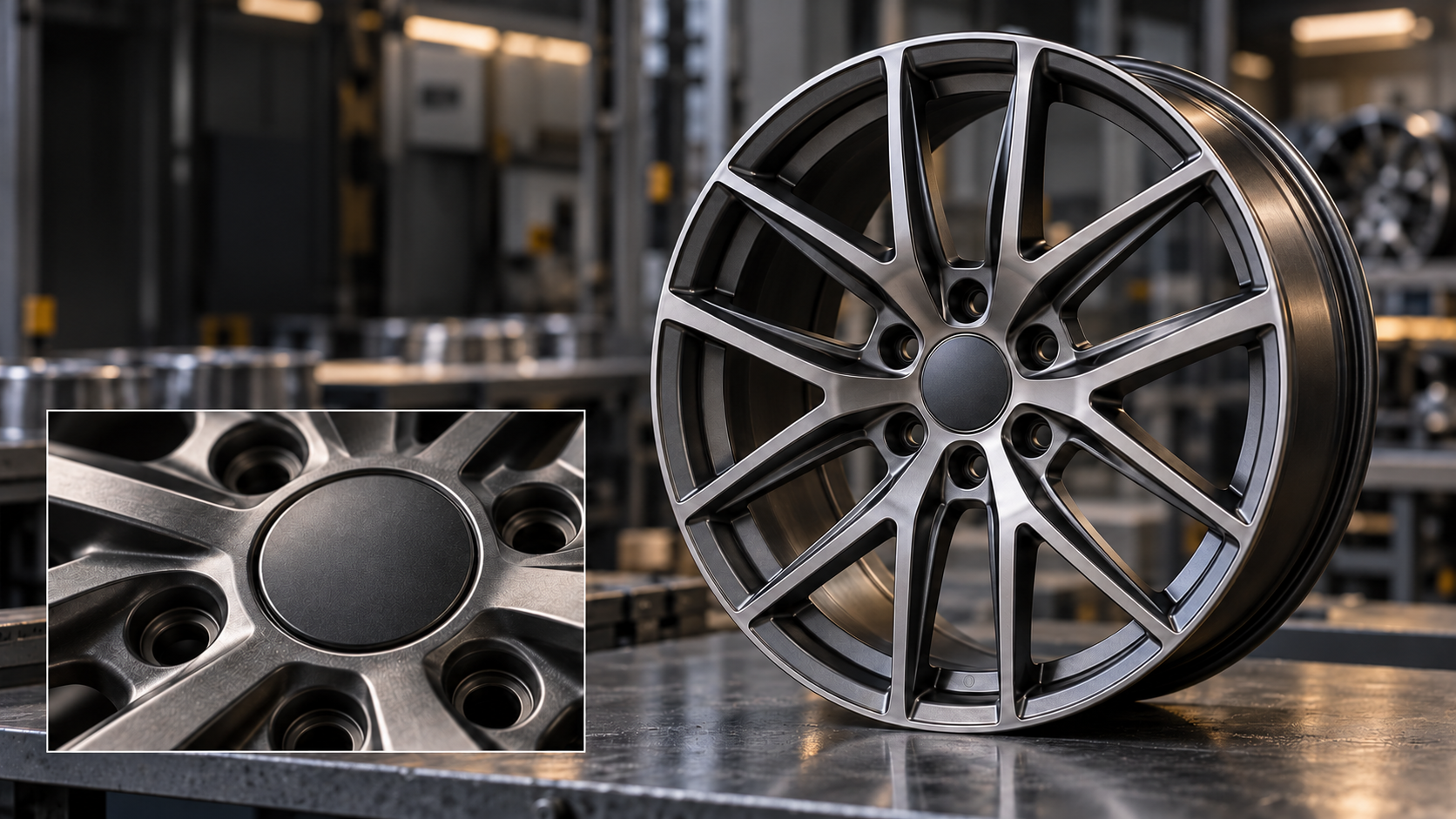
A wheel logo may be small, but it plays a clear role in how customers see your brand. A sharp, well-placed mark makes a product look complete. In contrast, uneven placement, weak contrast or a loose center cap can reduce confidence in the whole wheel.
For distributors, wheel brands and dealers, custom logo wheels need more than an artwork file. Buyers should define where the logo sits, how it is applied and how the finished result will be checked.
This checklist helps you turn a brand design into a clear production brief, from the first sample to repeat orders.
Start Custom Logo Wheels with a Clear Artwork Brief
Before discussing logo placement, prepare one approved artwork file. Small differences between files can lead to changes in letter spacing, line thickness or overall shape.
Supply vector artwork, such as an AI, EPS or suitable vector PDF file. Convert fonts to outlines so the design does not change when opened on another computer.
Your brief should include:
- The approved logo file and revision number.
- Logo width and height in millimeters.
- Color references, where needed.
- Minimum line thickness and clear space.
- The wheel models and finishes that will carry the logo.
- Separate artwork rules for center caps, wheel surfaces and packaging.
Also, check the logo at its actual production size. Fine details that look clear on a large screen may become hard to read on a small cap.
If a simpler version is needed, approve it before sampling.
Choose a Private Label Wheel Logo Position
A private label wheel logo should be easy to see and suit the wheel design. However, visibility alone should not decide its location.
Common areas to discuss with the manufacturer include the center cap, a suitable spoke surface or an approved area near the outer face. Each position offers a different balance of space, contrast and exposure.
| Position | Branding benefit | Main point to confirm |
| Center cap | A clear central brand mark | Cap fit, logo size and retention |
| Spoke face | Branding directly on the wheel | Available surface and engineering approval |
| Approved outer-face area | A subtle secondary detail | Exposure to handling and curb contact |
Use a drawing to define the location. For example, set the logo’s distance from a fixed feature and show its angle relative to the valve hole or a named spoke.
Avoid vague instructions such as “place near the edge.” Also, keep branding clear of required identification marks and functional surfaces.
Any engraving that removes wheel material should have the manufacturer’s engineering approval for its location and depth.
Wheel Center Cap Logo: Check the Complete Assembly
The wheel center cap logo is often the main brand feature customers notice. Yet the cap must do more than display the correct artwork: it must also fit the selected wheel securely.
Do not approve a cap based only on its front diameter. Confirm the mounting dimensions, clip design, installed depth and clearance for the intended wheel and vehicle application.
Review these details on an assembled sample:
- Is the logo centered on the visible cap face?
- Does the cap sit at the agreed height?
- Does it fit securely without damage during installation?
- Does the cap finish match the approved wheel sample?
- Can the dealer order the correct replacement cap?
Also, distinguish logo alignment on the cap from cap alignment on the wheel. If you require the logo to line up with a spoke, confirm whether the cap design supports a fixed position.
An ordinary center cap rotates with the wheel. A logo that stays upright requires a different mechanism, which should be specified separately.
Laser Engraved Wheels: Confirm the Actual Marking Process
Laser engraved wheels can provide crisp branding, but the term does not fully describe the production process.
Laser marking may alter the surface appearance or remove part of a coating. Deeper engraving removes material. These processes can create different results on painted, polished and other finished surfaces.
Therefore, request a sample made with the exact wheel finish and marking process planned for production.
Ask the supplier:
- What material or coating does the laser affect?
- Is the logo applied before or after the final coating?
- Does the process expose bare metal?
- Is any protective treatment needed afterward?
- How will logo contrast and edge quality be controlled?
Do not assume that a deeper mark is better. Depth should follow an approved specification, while contrast should be checked on the finished wheel.
Wheelman lists custom logo engraving among its OEM and ODM services. Buyers seeking a specific laser process should confirm the method and its suitability for their chosen wheel and finish.
Check Custom Logo Wheels for Durability
A logo may look good when new yet change after cleaning, outdoor exposure or regular handling. Durability checks should therefore reflect the materials and process used.
A printed cap, bonded badge and engraved wheel surface will not need exactly the same test plan. Agree on suitable checks with the supplier before approving production.
| Check | What to assess |
| Cleaning resistance | Changes in color, contrast or surface condition after approved cleaning |
| Adhesion | Lifting or separation of applied coatings, print or bonded badges |
| Weathering | Fading, yellowing or other appearance changes |
| Corrosion resistance | Deterioration around marked or exposed areas |
| Temperature cycling | Cracks, distortion or separation in the cap assembly |
| Cap retention | Secure fit under the agreed test conditions |
For each test, define the method, exposure conditions and pass criteria. A statement such as “tested for durability” is too broad to compare suppliers.
Also, request care instructions for the finished product. Dealers need to know which cleaning products and tools are suitable.
Logo and finish checks complement the wheel’s structural validation; they do not replace it.
Keep the Private Label Wheel Logo Consistent Across Sizes
The same artwork may look different on an 18-inch wheel and a larger version with a different spoke shape. A change in concavity can also affect the available marking surface.
Decide whether the logo will keep the same physical size across the range or use approved size-specific versions. Then record that choice for each model.
For repeat orders, link every wheel specification to:
- The current artwork revision.
- The placement drawing.
- The approved marking process.
- The finish reference.
- The correct center cap part number.
Keep an approved physical sample as well. Photos help with communication, but lighting and camera settings can hide differences in sheen or contrast.
Wheelman’s batch consistency guide highlights the value of controlled specifications and approved samples for repeat production.
Use a Final Custom Logo Wheels Approval Checklist
Before releasing a bulk order, confirm the following points with your supplier:
- Artwork: The correct file and revision are recorded.
- Placement: Dimensions, angle and reference points are defined.
- Process: The marking method and production sequence are approved.
- Appearance: Logo edges, contrast and finish match the sample.
- Center cap: Fit, retention and replacement part details are confirmed.
- Durability: Relevant tests and acceptance limits are agreed.
- Inspection: Sampling levels and defect limits are documented.
- Packaging: Protection prevents rubbing against the logo and wheel face.
- Repeat orders: Changes require review before production.
Approve a first production piece before the full batch proceeds. This gives both teams a chance to catch differences while they are easier to correct.
Plan Your Custom Logo Wheels with Wheelman
Wheelman offers private-label services that include custom logo engraving, wheel styling and dealer-branded packaging. These options allow buyers to discuss the wheel and its brand presentation as one project.
To start, send Wheelman your wheel specifications, order quantity, logo artwork, preferred placement and finish reference. Include any durability requirements and center cap needs in the same brief.
A clear specification helps turn custom logo wheels into a repeatable product line—with consistent branding from the first sample to the next replacement order.


