Are Cast Aluminum Wheels Strong? Forged vs. Cast, and How to Choose
Cast aluminum wheels are strong enough for most passenger-car applications, but strength is only part of the decision. This guide explains how strong cast wheels really are, how forged rims compare, whether forged wheels are lighter, and how to choose between cast and forged for your product line.
2026/11/11
Reading volume: 0
News Details
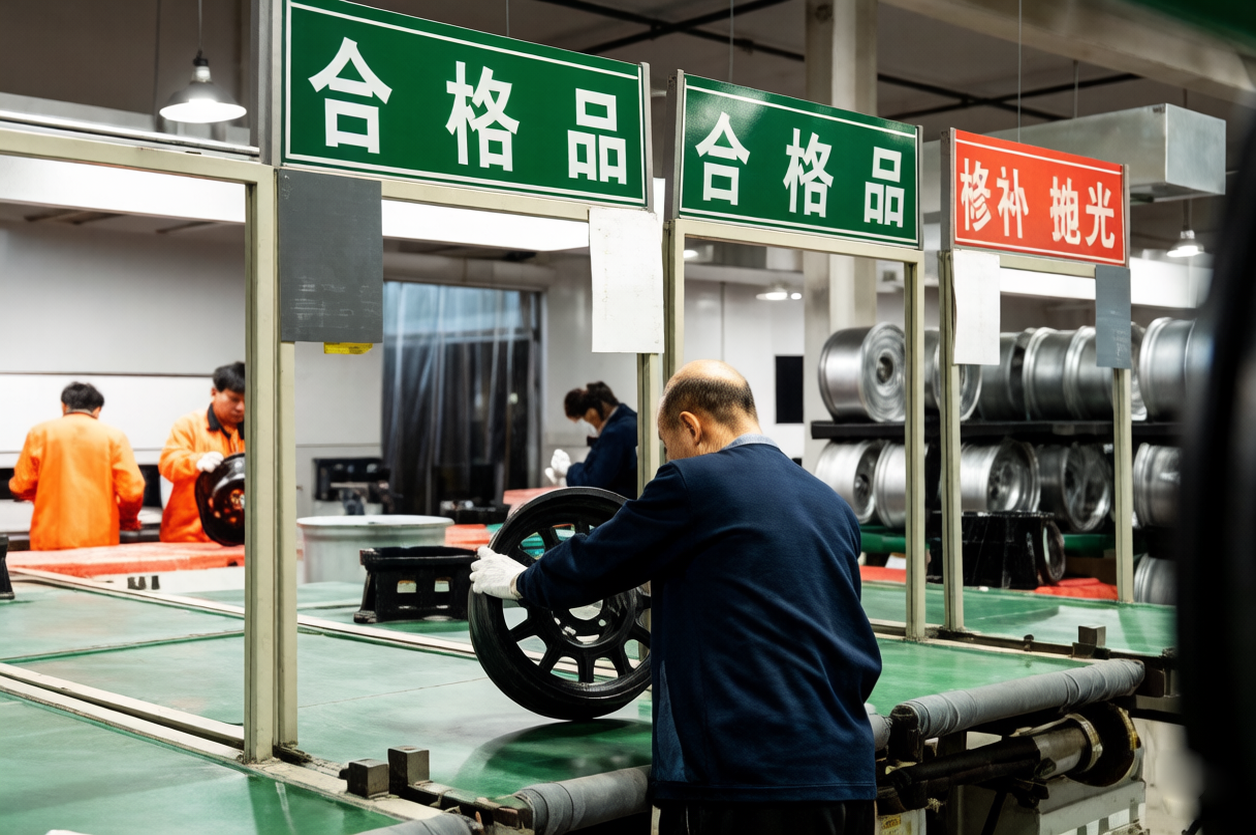
Are Cast Aluminum Wheels Strong? The Straight Answer
Yes — cast aluminum wheels are strong. A properly engineered cast alloy wheel passes the same standardized safety tests as a forged wheel: impact, radial fatigue and cornering fatigue. Millions of passenger cars, SUVs and light trucks leave the factory on cast wheels every year, and a well-made cast wheel will deliver a normal on-road service life without problems.
The nuanced answer, however, is that "strong or not" is the wrong question when you are building a wheel program. Both cast and forged wheels can be made strong. The real questions are how much strength you get per kilogram of weight, how much design freedom you need, and what each construction costs at your volumes. This guide answers the questions buyers actually ask — are cast aluminum wheels strong, are forged wheels lighter, what "alloy" really means — and converts them into a decision framework for your product line.
How Cast Aluminum Achieves Strength — and Where Its Limits Lie
Cast wheels start as molten aluminum poured into a mold, where the metal cools and solidifies into the wheel's shape. Modern casting lines tightly control this process, and many cast wheels are also heat-treated to boost strength. The result is a sound, serviceable wheel that meets global safety standards.
The limits come from how the metal's internal structure forms. As molten aluminum cools freely in the mold, the grain structure is random rather than aligned, and small gas pockets or shrinkage porosity may remain inside the casting. Engineers design around this: sections are made slightly thicker, spoke shapes more conservative, and quality controls screen out defective castings. The wheel is strong — but it carries extra material to be strong, and intricate deep-concave or thin-spoke designs are harder to cast reliably.
Forged Rims vs Cast: Why Forging Elevates the Strength-to-Weight Ratio
Forged wheels are formed from a solid billet under a press, so the grain structure stays continuous and follows the wheel's geometry, with no casting porosity. In practical terms, this means:
- More strength from less material. A forged wheel of the same design can carry the same load at a lower weight, or carry a higher load at the same weight.
- Greater design freedom. Thinner spokes, deeper concave profiles and larger diameters are easier to achieve in forged 6061-T6 aluminum.
- Improved fatigue behavior. A dense, aligned structure handles repeated stress cycles — the load case that matters most in daily use — more predictably than a structure containing cast porosity.
This is why performance, luxury and heavy-duty programs lean toward forged construction even though cast wheels are objectively strong enough for standard use.
Are Forged Wheels Lighter?
Yes — for the same design, size and finish, a forged wheel is typically lighter than its cast equivalent, because the process extracts more strength from every kilogram of aluminum. The exact difference depends on the design; a wheel can be engineered heavy or light in either process, so treat any universal percentage claim with caution. What is reliably true is that forging gives engineers the option to remove material without sacrificing strength.
Weight matters more than many buyers expect. Unsprung mass — the weight of wheels, tires and brakes — affects acceleration, braking, steering response and ride quality. For electric vehicles, where range is a selling point and battery packs add mass, the combination of lower wheel weight and higher load capacity makes forged construction especially relevant.
Alloy vs Forged Wheels: It's the Process, Not the Material
One terminology clarification resolves most confusion on this topic. An "alloy wheel" is any wheel made from aluminum alloy instead of steel — including cast aluminum wheels. Most forged wheels are also alloy wheels, because forged wheel programs use 6061-T6 aluminum alloy. So "alloy vs forged wheels" is not a comparison of two materials; the meaningful comparison is cast alloy vs forged alloy. When a supplier lists "forged wheels and alloy wheels" as separate lines, interpret it as two constructions: pressed-from-billet versus cast-in-mold.
The same logic answers the related question of what the difference is between forged wheels and alloy wheels: the material family is largely the same, and the difference lies in the manufacturing process — which in turn dictates grain structure, weight potential, design freedom and price.
Forged or Cast: A Decision Guide for Your Product Line
For a distributor, dealer brand or fleet buyer, the choice is rarely "which is better" and usually "which fits this SKU." The same catalog can carry both:
| Your program priority | Better fit | Why |
|---|---|---|
| Cost-led replacement lines, high-volume uniform SKUs | Cast | Lower unit cost at scale; strength is fully adequate for on-road use |
| Performance trims, luxury fitments, show builds | Forged | Lower weight, deeper designs, premium positioning |
| Large diameters, deep concave, custom offset (ET) | Forged | Casting intricate thin sections reliably is difficult |
| Heavy EVs, off-road and fleet duty cycles | Forged | Higher load capacity per kilogram and predictable fatigue behavior |
| Low-volume custom or private-label programs | Forged | Billet machining avoids per-design casting tooling; Wheelman accepts retail orders from 1 set, wholesale from 60 pieces |
Lead times follow the same logic. Forged monoblock finishes such as brushed, polished or painted typically ship in 15–25 days; chrome plating adds approximately 10–15 days; two- and three-piece builds take 25–35 days. If your line mixes constructions, plan replenishment per structure rather than treating "wheels" as a single lead time.
What to Verify Before Ordering — Cast or Forged
Whichever construction you buy, the verification checklist is similar:
- Standardized test results. Impact, radial fatigue and cornering fatigue reports for the actual design, not a family-level claim.
- Quality-system certification. Recognized automotive quality systems such as ISO9001, QS9000 or TS16949, and DOT registration for US-market wheels.
- Material documentation. For forged wheels, confirmation of 6061-T6 billet and heat-treatment records.
- Fitment confirmation. Diameter, width, bolt pattern, center bore, offset and load requirement matched to the vehicle data in writing before production.
- OEM-grade validation. For OEM and OES programs, PPAP documentation and FEA-backed design review.
Wheelman's forged programs are built around this checklist — FEA before tooling, PPAP validation, certification to ISO9001, QS9000 and TS16949, DOT registration, and pre-production 3D renderings with fitment confirmation before a single billet is cut.
Key Takeaways
- Cast aluminum wheels are strong — they pass the same standardized safety tests as forged wheels — but they carry more material to achieve it.
- Forged rims vs cast is a question of strength-to-weight ratio and design freedom, not a strength-vs-nothing question.
- Forged wheels are typically lighter than cast equivalents of the same design; treat universal percentage claims with caution.
- "Alloy vs forged" is really "cast alloy vs forged alloy" — the difference is in the process, not the material.
- Choose cast for cost-led volume lines and forged for performance, custom, heavy-duty and private-label programs; verify both with test reports, certifications and written fitment confirmation.
If you are evaluating cast and forged for an upcoming program, Wheelman supplies forged 6061-T6 wheels from 17 to 23 inches in monoblock, two-piece and three-piece construction, with FEA-backed design and global delivery. Share your fitments, volumes and target price points, and we will recommend the construction that fits each SKU.
Share to:


