How Long Do Forged Wheels Last? Lifespan, Inspection, and When to Replace Them
Forged wheels don’t have a built-in expiration date — their lifespan depends on loads, road conditions, and how well they’re maintained. This guide explains what forged wheels are engineered to handle, how to check their condition, and when repairs are okay versus when replacement is the smarter option.
2026/11/17
Reading volume: 0
News Details
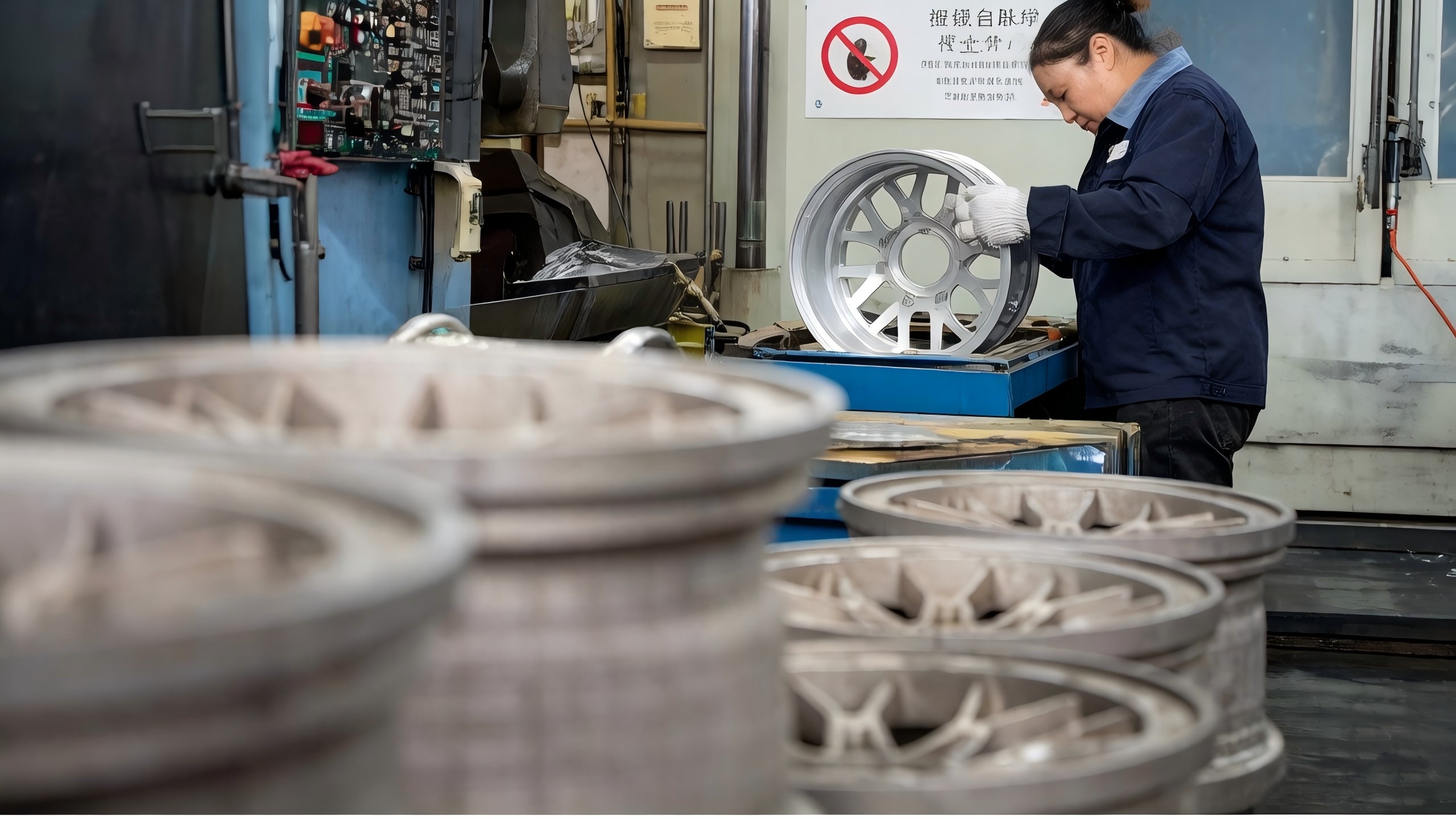
Short Answer: No Expiry Date, But Actual Wear and Tear
Forged wheels do not have a set expiration date, and no manufacturer can honestly provide a universal mileage figure. A forged 6061-T6 wheel that is correctly rated for its load, properly installed, and free of impact damage can serve a vehicle for many years—often as long as the vehicle itself. What actually ends a wheel's service life is not the calendar, but specific events (severe pothole or curb impacts), accumulated corrosion, or loads the wheel was never designed to handle.
This distinction is important for buyers. When you ask "how long do forged wheels last," the useful question actually breaks down into three: what the wheel is built to withstand, what shortens its service life in real-world use, and how to inspect it so that damaged wheels are caught before they fail. This guide addresses all three-plus how to specify wheels that can withstand long service in demanding duty cycles.
What Forged Wheels Are Built to Withstand
The long service life of forged wheels begins with the material and the manufacturing process. Forged wheels are pressed from a solid 6061-T6 aluminum billet, creating a dense grain structure with no casting porosity. This structure gives forging its high strength-to-weight ratio, and is also why forged wheels can withstand repeated stress cycles (radial loads, cornering forces, impact forces) that characterize daily use.
Before a design goes into production, it is validated against standardized tests: impact tests, radial fatigue tests, and cornering fatigue tests. These are not marketing claims, but pass/fail engineering thresholds. A wheel that passes these tests has demonstrated that it can withstand the loads of actual road use. Wheelman's designs undergo FEA analysis before tooling, and are validated under PPAP protocols, with quality systems certified to ISO9001, QS9000, and TS16949. These are the same documentation trails that buyers can request to confirm that a wheel was engineered for long service, not just designed for looks.
What Actually Shortens a Wheel's Service Life
Field failures are rarely due to the alloy or the forging itself. They stem from events and conditions that the wheel was not sized or designed to handle:
- Impact damage. Severe pothole impacts, curb hits, and off-road rock strikes are the most common causes of cracks and deformation. Forged wheels deform less readily than cast wheels, but a sufficiently severe impact can damage any wheel.
- Overloading. Consistently carrying loads above the wheel's rated capacity-common in commercial and off-road applications when load ratings are overlooked during specification-accelerates fatigue. This is why duty-cycle matching is more important for fleets than for private vehicles.
- Corrosion. Road salt, coastal air, and winter chemicals can damage finishes and, over the course of years, the underlying metal. A compromised finish is the entry point for corrosion.
- Improper repair or installation. Over-torqued lug nuts, hub-centricity problems caused by incorrect center bores, or unqualified welding repairs all introduce stresses that the original design never accounted for.
- Neglected tire pressure. Chronic under-inflation transfers impact loads to the barrel instead of the tire, increasing the risk of deformation and cracking over time.
Notice the pattern: Most of these are specification, handling, or maintenance issues—all of which are controllable.
How to Inspect Forged Wheels—And How Often
A practical inspection routine catches damage long before it leads to failure. For fleets and dealers, incorporate it into regular service intervals; for private buyers, the trigger is any noticeable impact or new vibration.
- After any severe impact. Stop and check for visible cracks, especially around the spoke-to-barrel transition and the lug nut area. If a wheel takes a hit hard enough to cause subsequent vibration, have it professionally inspected before continuing to drive at speed.
- At every tire rotation or seasonal changeover. Look for curb rash, deformation at the lip, flaking finish, and any signs of air leakage.
- When vibration appears at high speeds. Persistent vibration that persists even after wheel balancing indicates runout—a bent barrel or an out-of-true mounting face—not a tire issue.
- Before fitting to a new vehicle. Confirm the wheel's load rating and fitment data (diameter, width, PCD, center bore, ET) against the vehicle's specifications; an incorrectly fitted wheel ages quickly, and the vehicle's handling suffers as a result.
Inspection is also where documentation proves its value: suppliers that provide actual production photos and fitment confirmation prior to delivery—as Wheelman does with pre-production 3D renderings and fitment checks—give you a baseline for comparison at every service interval.
Repair or Replace? Where to Draw the Line
Damage falls into two very different categories. Cosmetic damage—curb rash, scuffs, peeling clear coat—can usually be refinished without affecting the wheel's structure, and refinishing is a normal part of long-term ownership.
Structural damage is a different matter. Cracks, deformation through the barrel, damage around the lug nut seats, or a wheel that has lost air due to impact have all compromised the wheel's engineering. Whether that wheel can be safely returned to service is a decision for a qualified professional inspection—not a guess, and certainly not a DIY weld. As a rule of thumb for fleet procurement: structural repairs on load-bearing wheels should only be trusted to a documented, professional assessment, and replacement is the conservative default for wheels in heavy-duty duty cycles. The modest cost of one wheel is small compared to the cost of a failure at high speed.
Specifying Wheels for Long Service Life
Service life is largely determined during the ordering stage. The specifications that extend real-world service life include:
- Load margin matched to duty cycle. Size for the heaviest realistic use—loaded trunk, towing, off-road payloads—not the empty vehicle. Heavy EVs, whose battery packs add significant mass, deserve special attention here.
- Forged 6061-T6 with documentation. Material certificates and heat treatment records are how you confirm that the wheel is exactly as described in the quotation.
- Correct fitment in writing. Precise matching of bolt pattern, width, center bore, and offset—Wheelman machines ET to specification and confirms fitment before production—prevents the stress concentrations that come from "close enough" fitment.
- Finish suited to the climate. Salt-belt and coastal programs should discuss corrosion-resistant finish systems during the RFQ stage.
A wheel specified in this way, inspected on schedule, and repaired conservatively, is not the weak point of a vehicle program—it is one of its most durable components.
Key Takeaways
- Forged wheels do not have a fixed expiration date; their service life ends due to impact events, overloading, corrosion, or improper repair—not due to time.
- Forged 6061-T6 construction and standardized fatigue testing are engineered for long, repeated stress cycles.
- Inspect after any severe impact, during tire rotations, and whenever vibration appears; verify fitment and load ratings before reusing.
- Cosmetic damage can be refinished; structural damage requires professional assessment, and replacement is the conservative choice for heavy-duty fleets.
- Long service life is determined at the time of purchase: load margin, documented 6061-T6, written fitment confirmation, and climate-appropriate finishes.
Planning a program for demanding duty cycles? Wheelman supplies forged 6061-T6 wheels from 17 to 23 inches in monoblock, two-piece, and three-piece configurations, validated under FEA, PPAP, and DOT requirements. Share your duty cycles and fitment requirements, and we will provide specifications for wheels built to outlast the season.
Share to:


