EV Wheel Noise and Vibration: What Dealers Should Check Before Launch
News Details
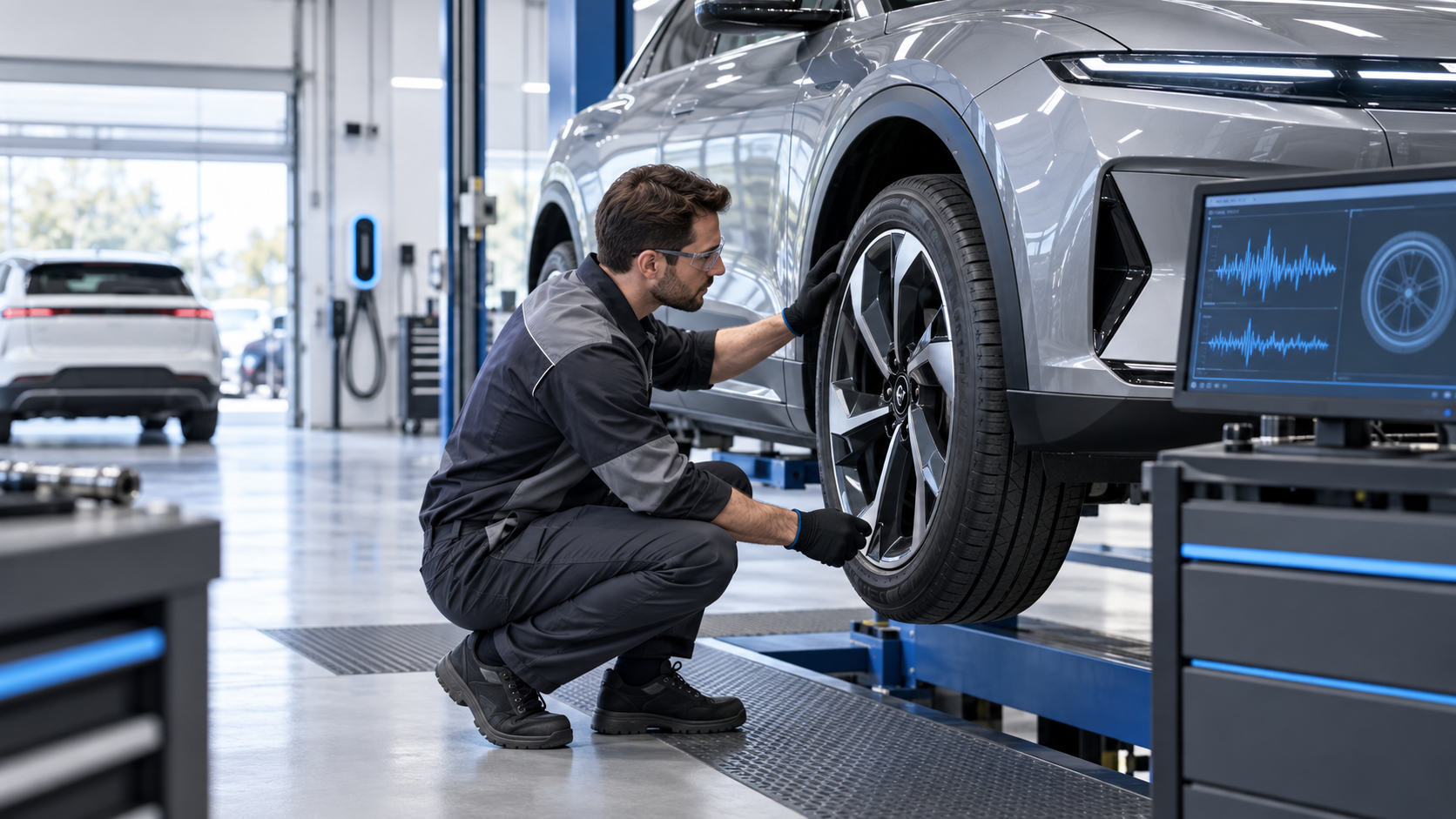
Electric vehicles are inherently quiet in their design. Because of this, even minor wheel-related issues can become easily perceptible to drivers. A subtle hum, slight vibration, or steering wheel buzz may be far more noticeable in an EV than in a gasoline-powered vehicle.
For dealerships, this factor is critical prior to a new model's market launch. A newly introduced EV model must deliver a smooth, stable, and refined driving experience from the very first test drive. Therefore, early-stage inspection of EV wheel noise and vibration can help mitigate customer complaints, safeguard brand reputation, and enhance overall buyer satisfaction.
Why Electric Vehicle Wheels Require Specialized Attention
Electric vehicles impose distinct demands on their wheels. Firstly, they are typically heavier due to the integrated battery pack. Additionally, instant torque output places greater mechanical stress on the wheel and tire assembly. Furthermore, the acoustically insulated cabin amplifies the perception of road noise.
This is precisely why wheel NVH (Noise, Vibration, and Harshness) testing for electric vehicles should be an integral component of every dealership's pre-launch preparation. NVH refers to the overall acoustic and vibrational comfort of a vehicle, which in practical terms, quantifies how smooth and quiet the ride feels.
If the wheel and tire setup is improperly configured, customers may detect:
- A humming noise at constant cruising speeds
- Vibrations transmitted through the seat or steering wheel
- A subtle shudder during acceleration
- Noise level variations across different road surfaces
- Premature uneven tire wear after minimal usage
While these issues may appear minor, they can significantly diminish the perceived premium quality of the EV.
Verify Wheel Balance Prior to Vehicle Delivery
Wheel balance verification is one of the most critical initial checks dealerships should conduct. Even a minute imbalance can induce noticeable vibrations at higher speeds. Given the inherent quietness of EVs, such vibrations may be perceived as more pronounced by the driver.
Before launch, dealerships should review EV-specific wheel balancing procedures with their service teams. This process must incorporate high-precision balancing equipment, thorough cleaning of mounting surfaces, and comprehensive inspection of the tire-and-wheel assembly.
Additionally, service technicians must verify that the tire is properly seated on the rim. Improper seating can result in radial runout, vibrations, or noise—even when the balance readings appear to meet specifications.
Conduct Inspections for Wheel Runout and Roundness
Runout refers to the deviation of a wheel or tire from a true circular path during rotation. This can cause steering wheel shimmy, brake pedal pulsation, or low-speed wobble. For electric vehicles, runout verification is particularly important because the seamless torque delivery makes wheel irregularities more readily perceptible to the driver.
Dealerships should measure both radial and lateral runout. Radial runout affects vertical (up-and-down) wheel movement, while lateral runout impacts side-to-side lateral movement. Exceeding acceptable thresholds for either measurement will compromise ride smoothness.
When engineered and manufactured to high standards, forged wheels offer exceptional performance benefits, including reduced unsprung weight. However, forged wheel vibration can still arise if the wheel sustains damage, is improperly installed, or is paired with an incompatible tire specification. Consequently, every wheel must undergo rigorous inspection before the vehicle is presented in the showroom.
Review Tire Compatibility and Load Rating Specifications
The tire and wheel must function as a harmonized integrated system. EVs typically require tires with elevated load-carrying capacities, optimized rolling resistance, and specialized acoustic damping features. Mismatch between tire specifications and the vehicle's weight or torque output will invariably exacerbate noise and vibration issues.
Dealerships must confirm the following:
- Correct tire dimensional specifications
- Appropriate load index rating
- Validated speed rating
- Manufacturer-recommended tire pressure
- Correct rotational orientation (for directional tires)
- Absence of flat spotting caused by prolonged storage or transportation
Furthermore, tire pressure should only be measured when tires are in a cold state. Overinflation can amplify road noise, while underinflation may lead to excessive heat buildup, accelerated tread wear, and degraded handling dynamics.
Inspect Hub Fitment and Wheel Mounting Surface Integrity
Clean, precise hub-centric fitment is foundational to vibration-free driving. If the wheel is not perfectly centered on the hub flange, residual vibrations may persist even after professional balancing.
Before final delivery, service technicians must thoroughly inspect the hub bore diameter, (if applicable) the condition of centering rings, bolt circle pattern, and mounting face flatness. Contaminants such as brake dust, surface corrosion, accumulated paint residue, or minor debris can prevent the wheel from seating flush against the hub.
Additionally, wheel lug nuts or bolts must be tightened following the manufacturer's specified torque sequence to the recommended torque value. Uneven or improper torque application can lead to residual vibrations, brake rotor distortion/pulsation, or accelerated wheel component fatigue over time.
Conduct On-Road Validation of EV Wheel Noise Characteristics
While dynamometer or in-shop testing provides valuable data, real-world road testing remains indispensable. Dealerships should evaluate vehicle performance across multiple road surface types. Smooth asphalt, coarse-textured pavement, and highway-speed conditions can each reveal distinct categories of EV wheel noise.
During the test drive, monitor for noise level fluctuations under the following conditions:
- Low-speed rolling (coasting in drive mode without throttle input)
- Linear acceleration
- Deceleration/coasting
- Light brake application
- Sustained highway cruising
- Directional changes (left and right turns)
If the noise level correlates with vehicle speed, it most likely originates from the tire or wheel assembly. If the noise changes during cornering maneuvers, the issue may involve dynamic load distribution shifts, wheel bearing condition degradation, or suspension component wear.
Evaluate Interactions with Brake Systems and Regenerative Braking
Electric vehicles utilize regenerative braking systems, thereby reducing the frequency of friction brake usage. Even so, brake system components can influence wheel-end noise and vibration. Factors such as uneven brake rotor thickness variation, semi-seized caliper pistons, or debris accumulation near the brake dust shield can generate audible noises localized to the wheel well area.
For this reason, dealership technicians should avoid the assumption that all wheel-related noises stem from the tire. A comprehensive wheel-end inspection must encompass brake assembly condition, hub assembly integrity, wheel bearing preload, suspension linkage joints, and fastener security.
Validate Wheel Design Suitability for the EV Market Segment
Wheel design encompasses more than aesthetic appeal. For electric vehicles, wheel architecture must concurrently support structural rigidity, optimized mass distribution, effective thermal management, and low NVH characteristics. A proficient wheel manufacturing partner should demonstrate comprehensive understanding of these requirements from the project's inception.
Wheelman provides end-to-end wheel engineering solutions for next-generation vehicle platforms, catering to the design, product development, and volume manufacturing needs of B2B (business-to-business) clients. For automotive dealerships and OEM brands, selecting the optimal wheel specification plays a pivotal role in mitigating pre-launch technical risks and delivering a measurably refined driving experience.
Establish a Pre-Launch Wheel Quality Inspection ChecklistBefore vehicles are released to end customers, dealerships must implement a structured, repeatable wheel inspection protocol. A standardized checklist helps optimize service efficiency and minimizes post-delivery return visits for unresolved concerns.
Essential procedural steps include:
- Verification of factory wheel and tire specification conformance
- Cold tire pressure measurement and adjustment
- Visual inspection of wheel cosmetic finish and rim flange edge condition
- Hub fitment and mounting surface cleanliness verification
- Lug fastener torque verification
- Radial and lateral wheel/tire runout measurement
- Precision dynamic wheel balancing execution
- On-road validation at urban and highway speed ranges
- Documentation of all detected noise or vibration anomalies
- Component correction or replacement before final customer delivery
This standardized process equips the sales team to execute product launches with enhanced confidence. Concurrently, it empowers service departments to proactively resolve technical concerns before they escalate into formal customer complaints.
Final Summary
Electric vehicle buyers have elevated expectations for silent, vibration-free ride quality. Consequently, wheel system integrity exerts a disproportionate influence on the vehicle's initial perceptual impression. Even seemingly minor deviations in balance accuracy, fitment precision, tire specification conformance, or geometric roundness can generate noise and vibration characteristics that customers will detect immediately upon test drive.
By systematically auditing wheel NVH (noise, vibration, and harshness) performance for electric vehicles, proactively addressing forged wheel vibration mitigation protocols, implementing EV-tailored wheel balancing best practices, and validating EV-specific wheel noise characteristics prior to market launch, dealerships can consistently deliver a superior ownership experience from the very first customer interaction.


