
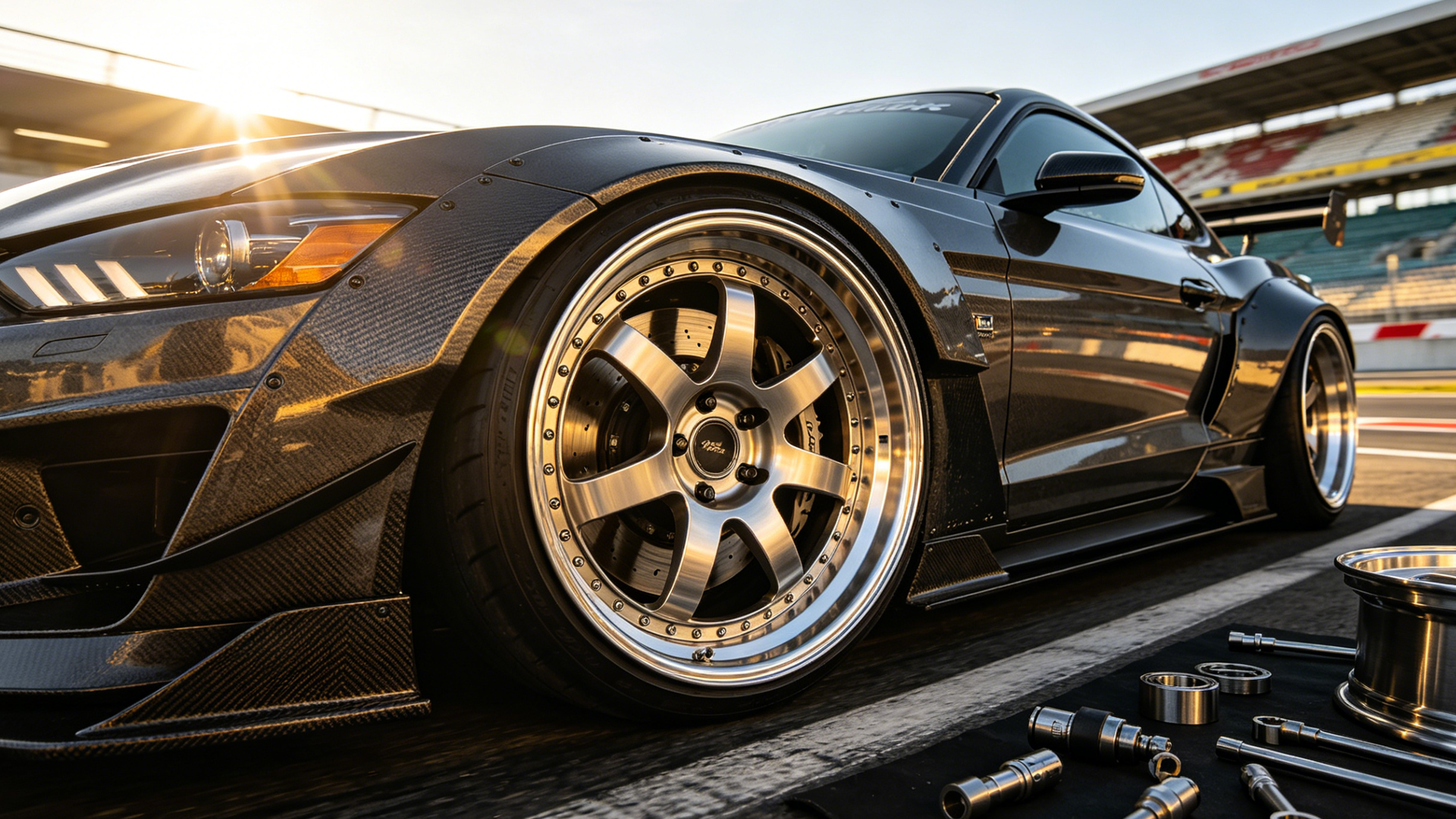
In the high-end automotive aftermarket, quality and safety are the most critical factors for success. When dealing with luxury vehicles, heavy trucks, or racing teams, standard rims often fall short of expectations. This is why top-tier businesses always look to stock forged wheels. However, to explain the high value of these premium products to your commercial clients, you must first understand the engineering behind them.
Many retailers ask about the exact steps behind this premium hardware. In this guide, we will answer how these elite rims are created and explain why the manufacturing process makes them the strongest choice on the market.
What Does Forged Wheels Mean?
Before diving into the factory steps, it is important to clarify the terminology. What does forged wheels mean in a commercial sense? Unlike cast rims, which are made by pouring liquid metal into a mold, forging means shaping a solid material using intense mechanical pressure.
When clients ask what are forged wheels, the simplest explanation is that they are high-performance rims engineered from a single solid block of aerospace-grade aluminum alloy. Because the metal is never melted down during the shaping process, it maintains its original structural integrity. This results in a finished product that is incredibly tough but surprisingly light.
Step 1: Heating the Aluminum Cylinder
The manufacturing process begins with a solid cylinder of high-grade 6061-T6 aluminum. This specific alloy is chosen because it contains magnesium and silicon, which make it highly resistant to corrosion and structural fatigue.
First, the factory technicians place this aluminum log into an industrial oven. The metal is heated to a very high temperature, but it is never allowed to melt into a liquid. The goal is simply to make the aluminum soft and flexible enough to be shaped by heavy machinery.
Step 2: The Massive Forging Press
Once the aluminum reaches the perfect temperature, it is moved to a massive hydraulic press. This machine is the heart of the operation. It applies thousands of tons of pressure to crush the heated aluminum block into a flat, round shape often called a "blank."
This extreme pressure forces the internal grain structure of the metal to change. Instead of a loose, random pattern found in cast metal, the grain becomes tightly packed and flows along the shape of the wheel. This dense grain structure is the exact reason why forged wheels can easily absorb huge impacts on the road without cracking or shattering.
Step 3: Flow Forming the Barrel
After the initial press, the blank is placed onto a specialized spinning machine. High-pressure rollers press against the metal while it spins at high speeds. This process stretches and shapes the aluminum blank into the final width and depth of the wheel barrel.
Flow forming ensures that the outer rim of the wheel remains incredibly thin and lightweight. However, because the metal has been compressed by the rollers, it retains maximum structural strength. This step is vital for creating wheels that reduce a vehicle's unsprung weight, which improves fuel economy and steering response.
Step 4: Precision CNC Machining
At this stage, the wheel looks like a solid, smooth metal drum. To create the beautiful visual patterns and spokes, the rim is moved to a high-tech Computer Numerical Control (CNC) lathe.
The CNC machine uses sharp cutting tools to carve out the exact design programmed by the engineers. This machine removes all the excess metal to create thin spokes, deep lips, and precise bolt patterns. Because the machine is fully automated, the measurements are accurate down to a fraction of a millimeter. This precision ensures that every wheel is perfectly balanced, eliminating any high-speed vibrations.
Real-World Solutions from Wheelman Auto
Managing a reliable supply chain for custom aluminum rims requires a partner with deep manufacturing expertise. At Wheelman Auto, we have over 20 years of experience producing high-strength alloy and custom forged wheels for global B2B buyers.
Wheelman Auto Case Study: The High-Speed Track Fleet A professional driving academy was looking to upgrade the rims on their sports car fleet. They were using standard cast wheels, but the intense heat from the brakes and constant cornering caused the rims to warp over time. The academy directors needed to understand what are forged wheels capable of handling under track conditions.
The engineering team at Wheelman-Auto.com provided a complete solution:
-
Custom Forged Production: We manufactured a dedicated batch of monoblock forged wheels tailored to the exact offsets of their track cars.
-
Rigorous Testing: Every wheel passed strict JWL/VIA and ISO/TS16949 testing, including impact and radial fatigue trials.
-
Rapid Wholesale Turnaround: Our 40,000-square-meter factory completed the bulk order within 45 days, allowing the academy to start their racing season on time.
After switching to Wheelman Auto, the academy reported zero wheel failures or warping issues. The cars handled the tight corners with much more precision, and the lighter wheel weight helped reduce brake wear across the entire fleet.
Summary
In conclusion, understanding how are forged wheels made helps your business market these premium products with absolute confidence. From the initial hydraulic press to the final precision CNC cut, every step of the process is designed to maximize strength and minimize weight.
If you are looking for a trusted B2B manufacturer to supply your business with top-tier custom rims, Wheelman Auto is here to support your company's growth. Visit Wheelman-Auto.com today to check our customizable product lines and discover our wholesale OEM and ODM manufacturing services.


